Fossil-free
We annually map our scope 3 emissions, which amounted to 498 kilotons of CO₂-equivalent in 2024. The largest share originates from purchased goods, services, and capital goods (262 kilotons). This includes, among other things, new trains, train components, construction projects, and operational assets.
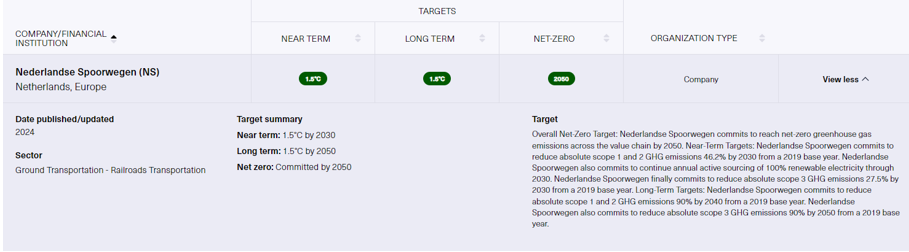
It is also important to recognise that NS, in accordance with the methodology of the Science Based Targets initiative, has committed to reducing scope 3 greenhouse gas emissions by 27.5% by 2030 and achieving net-zero emissions no later than 2050. Since the impact of purchased goods and services constitutes a significant portion of our total scope 3 emissions, we cannot realise this ambitious target without suppliers implementing serious reduction strategies.
Therefore, we want to work as effectively as possible with our suppliers to first gain better insight into the emissions of these greenhouse gases. Currently, NS requests in most contracts that its suppliers provide a calculation of the greenhouse gas emissions related to the product or service delivered. Additionally, we challenge our suppliers to reduce CO₂ emissions caused by raw material use, production, transport, and the use of products and services.
To reduce the emissions associated with goods, suppliers can apply circular strategies, such as using recycled materials (potentially by closing the material loop in collaboration with NS) or designing products to be repairable or refurbishable. In addition, suppliers can lower energy consumption and increase the use of renewable energy sources or make transport more sustainable. NS is keen to collaborate and support suppliers in identifying opportunities to create meaningful impact together.